
Experiment design for reducing uncertainty where it matters most
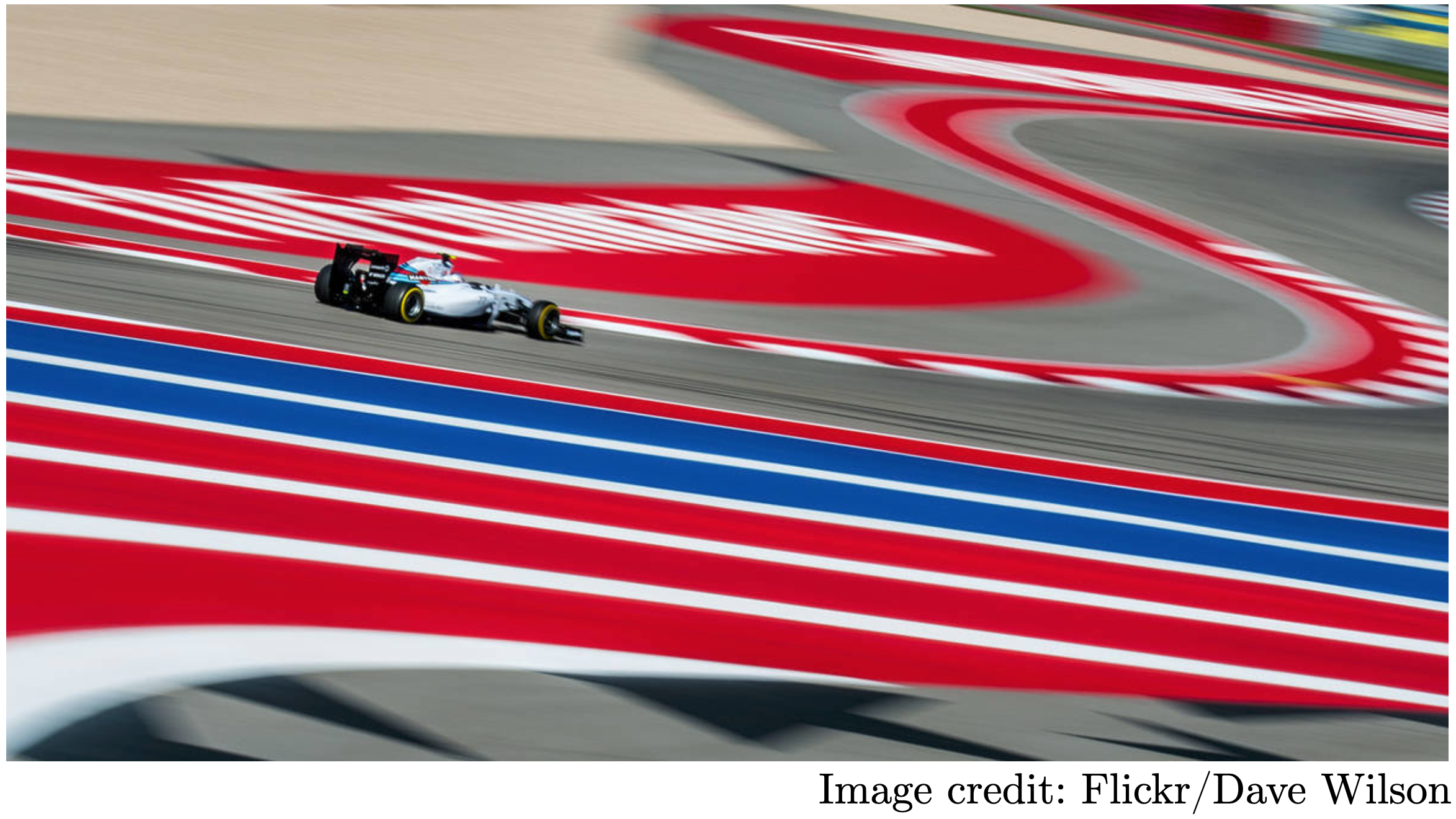
If you show up to a car racing track, and you have one test lap before the race, how do you use that test lap to learn information about the car's performance on the track that will most benefit your race performance? Data in many applications is expensive to collect, and we address how to collect data that reduces uncertainty in areas that most benefit subsequent performance (e.g. reduce costs the most, lead to fastest car racing times, etc).
We first look at this when using a Gaussian process regressor to model the latent dynamics of the system. This is a non-parametric approach that includes uncertainty estimates in the prediction. For a chance-constrained optimization control objective, we then aim to reduce uncertainty in areas that most affect the control objective (i.e. where the uncertainty actually affects the performance of the system). This paper is available on Google Scholar.
Then we look at a parametric approach to modeling the system dynamics. We consider the problem of designing experiments to reduce uncertainty in the parameters of the model that most affect the control objective. This paper is available on Google Scholar.